E-Way Bill System Under GST

CONSULTANTS
Environmental management is undergoing a major transformation. For decades, organizations have relied on environmental management systems that focused primarily on documentation, audits, procedures, and compliance requirements. However, the modern business environment demands much more than maintaining records and meeting regulatory Read More
Filing the GST Annual Return for FY 2025–26 is a crucial compliance requirement for every GST-registered business in India. The annual return provides a consolidated summary of all GST transactions carried out during the financial year and helps ensure that Read More
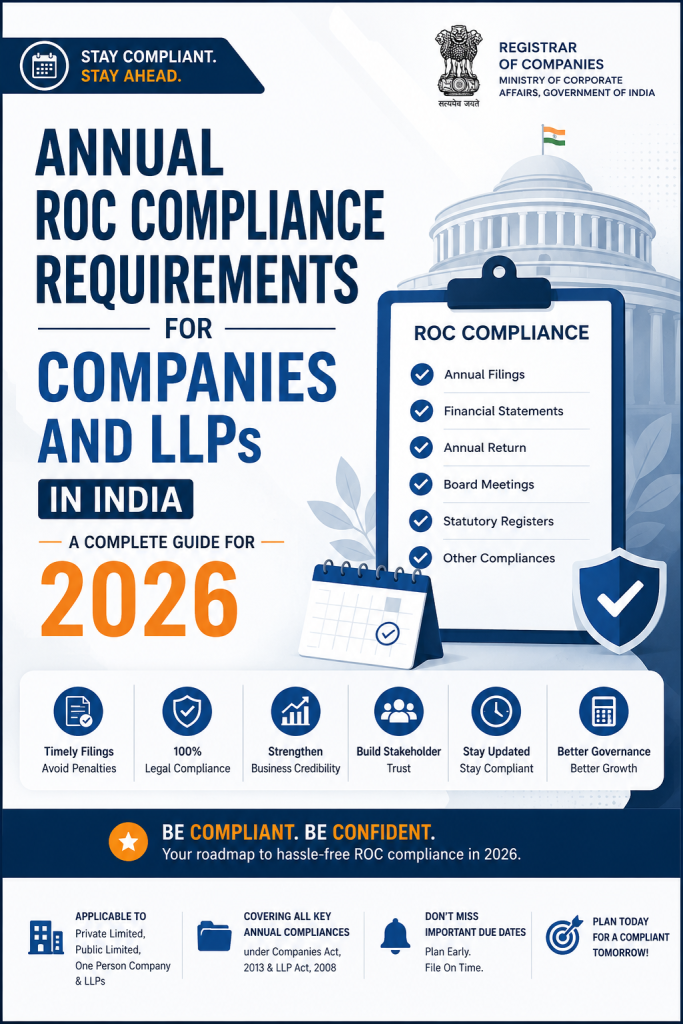
Maintaining compliance with the Registrar of Companies (ROC) is one of the most important responsibilities for businesses operating in India. Whether you run a private limited company, public company, startup, or Limited Liability Partnership (LLP), annual ROC compliance ensures that Read More

Understanding Tax Deduction at Source Under GST Section 51 Tax Deduction at Source (TDS) isn’t limited to income tax – it’s also a crucial component of the Goods and Services Tax (GST) framework. Section 51 of the CGST Act Read More
The Goods and Services Tax (GST) system in India requires taxpayers to file a range of returns throughout the financial year. One of the most important of these is GSTR-9, the annual return that consolidates a business’s GST transactions for Read More
India’s Goods and Services Tax (GST) regime, which replaced numerous indirect taxes, aims to streamline tax collection, improve transparency, and ensure uniformity across the country. While it offers several benefits to businesses and consumers, it also places significant responsibilities on Read More
A composite supply refers to a combination of two or more taxable goods or services that a seller naturally bundles together and supplies in the ordinary course of business. In such cases, the seller considers one of the goods or Read More
The Reverse Charge Mechanism (RCM) is a provision under the Goods and Services Tax (GST) framework where the responsibility for paying tax shifts from the supplier to the recipient of goods or services. Unlike the traditional tax model, where the Read More